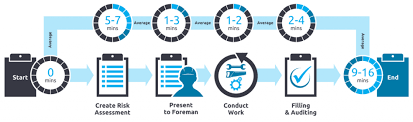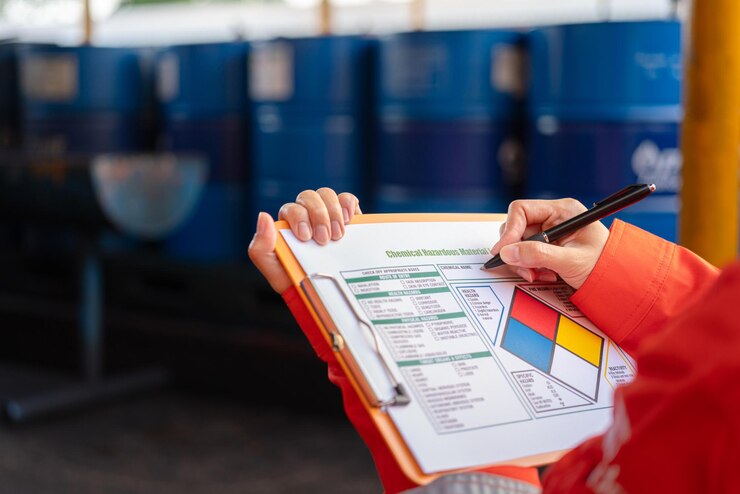

In the hussle and bussle of high risk construction work, an independent contractor will be on several different sites in a month so having a firm understanding of the risk assessment worksheet is vital. At each construction site they must carry out several safety and risk management processes or face strict penalties. Below is a high-level diagram of the processes that construction contractors should carry out based on our risk assessment productivity case study.
Read more
It makes sense to calculate just how much money you can save with risk assessment software before you sign up. So using our risk assessment productivity case study, we’ve calculated the savings for a business to be between $72.25 and $116.15 per worker, per month. Not too shabby. Under plant conditions these savings increase to between $144.50 and $231.63. Even better.
Read more
When working with hazardous substances or chemicals, it is especially important to effectively complete risk assessments. One way to help in this area is to complete a risk assessment checklist before beginning any high risk construction work.
Read more
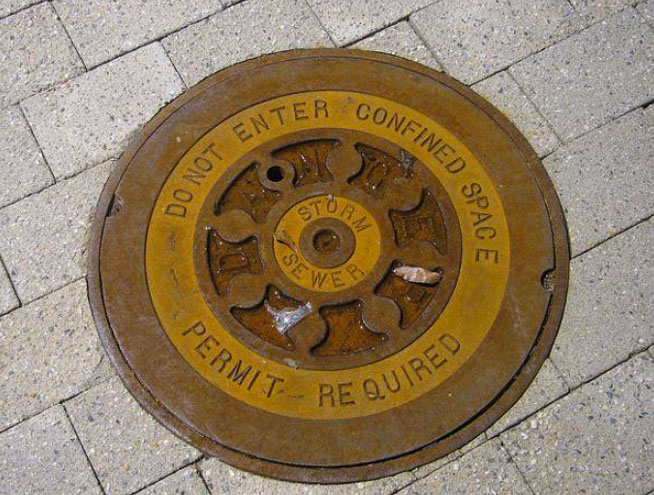
In the previous article ‘Working in Confined Spaces Risk Assessment’, we looked at the definition of ‘confined space’ and what generic risks and hazards are associated with it. It is clear that confined spaces fall under the mandate of what constitutes high risk construction work. Based on the Work Health and Safety Regulation 2011, Safe Work Australia outlines many of the considerable hazards involving with working in confined spaces but there substantial details to each of these that should be noted.
Read more
Every business risk is different but if you take an average value on the cost associated with each part of the risk analysis process, you’ll get a fair idea about how inefficient the paper-based method actually is. The data presented here was taken by surveying a construction business of 12 workers and represents a significant part of our broader risk assessment productivity case study. The average time spent on risk assessment processes per job is:
Read more
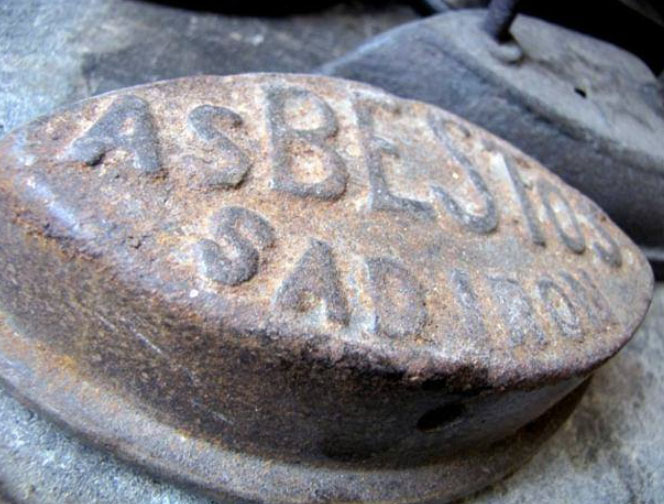
Strictly speaking, asbestos poisoning is not a medical term but it does broadly describe the range of potentially life threatening diseases someone can contract if exposed to asbestos fibres. Although the different types of asbestos have varying levels of danger, all have the potential to cause disease if mishandled. SafeWorkPro has more information on how to identify asbestos and manage it through an asbestos risk assessment. Regardless of this, the best safe operating procedures begin with a basic understanding of the health risks surrounding asbestos.
Read more
A key aspect of a safe and complete asbestos risk assessment is the inclusion of a hazardous substance risk assessment form. This is not something that should be taken lightly as asbestos in homes is a real risk in any property built before 1990. Therefore knowing how to identify asbestos is a critical step in any type of asbestos training.
Read more
Managing risk can be a complicated task especially when looking at a risk assessment for chemicals. This is a whole new ball game for risk management consultants and the harmonisation of regulatory frameworks don’t make this any clearer. The problem hazardous substances (or chemicals) have in high risk construction work is that the ordinary worker won’t know how to identify the specific elements and compounds that make a substance hazardous, nor have an in depth understanding of the appropriate control measures.
Read more
Chemistry is complicated stuff and a risk assessment for chemicals is no different. The range of hazardous chemicals used in the Australian construction industry is only overshadowed by the number of risks associated with them. A chemical risk assessment must take all of these inherent dangers into account but understanding every substance or chemical, along with the associated risks and hazards, is not a reasonably practicable option for most construction businesses.
Read more
Whether you work in an office or under the sun, sometimes everyone feels like they’re working in a tiny, unescapable box. When it comes to high risk construction work however, there is a specific meaning for working in confined spaces. This affects the many different factors a confined spaces risk assessment must take into account when conducting hazard management.
Read more
In previous articles on the SafeWorkPro Blog, we’ve looked at the risks and hazards of working in confined spaces. But what good is a risk if there no control measures?
Read more
Did you know that panthers and leopards are the same animal? No jokes. Only their fur coats are different, everything else is the same. Believe it or not, job safety analysis forms are similar (minus the claws, teeth, agility and general awesomeness).
Read more
Keeping up with technological advancements in the field of hazard and risk management is tiresome and at times just too much of a hassle. But turning a blind eye to developments in the risk analysis process will come at cost to business productivity and even worker safety.
Read more
The internet has fundamentally changed the way we do business. Files can be instantly transferred across the world, entire encyclopaedias of information are just a click away and social media gives your target market a voice. We live in a brave new world that is both deeply interconnected and highly competitive but there is one area where recent leaps in technology are yet to touch.
Read more
It seems like a straightforward process but risk assessments are a crucial part of displaying compliance with OHS laws and regulations. Without risk assessment forms there is no way for the relevant workplace health and safety regulator to determine if you have even attempted to maintain compliant OHS standards. Free risk assessment templates will give you a broad idea of what blank risk assessment forms look like but they won’t do the job for you. Knowing how to perform a risk assessment is relatively straight forward but getting it right involves several steps.
Read more
In the risk management process, you get what you pay for and although the idea of free risk assessment software seems attractive, you should consider a few factors before signing up. Quality risk assessment software should make the risk management process easier, not add another bureaucratic layer. Luckily for you, we know just the type.
Read more
In successful hazard and risk management it is important to keep on top of changes to OHS laws and regulations as well as how strongly your own risk assessment policy is performing. Although there is not much the ordinary business owner can do about government OHS legislation Australia, there is a great deal that can be done to improve risk assessment procedures.
Read more
The world is full of vague terms that sound important but don’t seem to have any concrete meaning. In occupational health and safety, one of the most broadly defined and confusing terms is ‘reasonably practicable’. So what does it mean and how does it affect your risk management planning? These are serious risk assessment questions that affect every Australian construction business.
Read more
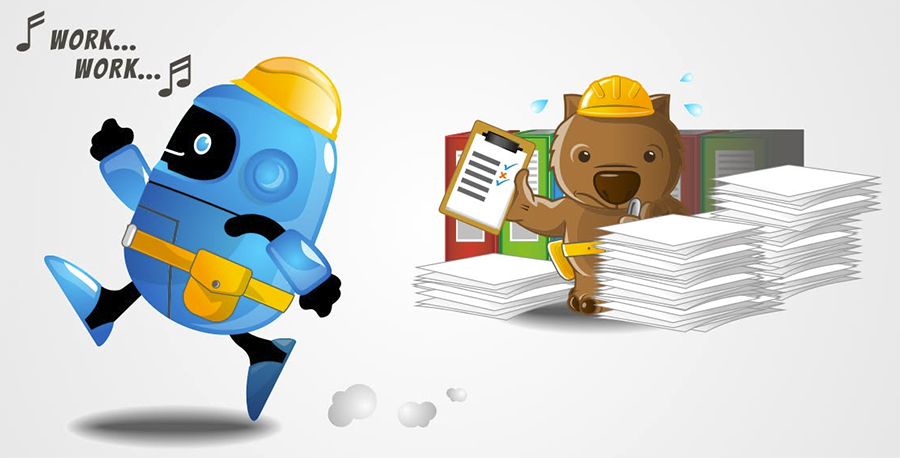
The days of carting around stacks of paperwork at high risk construction work are far behind us. The SafeWorkPro application allows you greater movement by storing all your risk assessment documentation locally. This means that as you move around you will always have access to all your files. Keeping up to date with any newly created documents is also just as simple. When you open your dashboard, an icon on the top right of your screen lets you know if there’s any files waiting for you to sync.
Read more
If you’re running a construction business or managing a worksite then you know the risk assessment process inside and out. You’ll know how to implement a safe work method statement (SWMS), rate a risk assessment matrix and complete a job safety analysis – all just part of remaining compliant with health and safety rules. All this paperwork seems like a hassle (and it is) so why don’t businesses involved in high risk construction work just buy risk assessments?
Read more
Wrapping your head around the concept of a risk assessment matrix can be tricky without an example to guide the way. An OHS/WHS risk assessment matrix is part of any general risk assessment form and helps workers put a numerical value on the hazard and risk identification process. Further, it gives each worker a subjective way to assess the risks present to them in the workplace and rank them based on their own assessment.
Read more
Health risks at work can range from catching a common cold off co-workers to suffering a serious injury. These risks however, are far more prominent in the construction industry, which saw 17 workplace deaths in 2013*. This is a stark figure, especially for a developed and modern country like Australia. Nonetheless the number of Australian worker injuries and fatalities is a solemn reminder of the inherent dangers involved in high risk construction work.
Read more
At the centre of SafeWorkPro is an aim to make Australian construction businesses more competitive. We strive to reduce the waste of resources that comes with risk assessments, in a way that will not compromise the safety of employees. As many construction businesses would know, compliance with the Work Health and Safety Act can be challenging, especially when facing the demands of never ending paperwork and administration. Although tried and tested, we believe the paper-based process is obsolete and does not deliver the best possible outcome in terms of safety and productivity. The risk assessment process is unnecessarily long and key safety information is not being delivered to workers when they need it most. So we decided to innovate and the result was a practical, easy to use tool that is available on any smartphone or tablet device.
Read more
Safety compliance software, health and safety software or risk assessment software? What’s the difference? Well these are but just a few names for what is essentially the same thing: software that makes the risk assessment process both more efficient and more compliant with OHS laws.
Read more
Back in the good old days the various stages of risk assessment involved turning up to work and not getting hurt. It was a simpler risk assessment system but suffice to say it didn’t do a lot for safe operating procedures.
Read more
What if I told you that construction risk assessments were so unnecessarily complicated that they actually constrain your productivity? If you’ve ever had to deal with an OHS risk assessment matrix than you’d know what I’m talking about.
Read more
The old saying goes ‘if it ain’t broke, don’t fix it’ and it may be true for some things in life but when it comes to risks in construction, this phrase is just plain wrong. In this age of digital technology, the traditional risk assessment is out-dated and inefficient.
Read more
The evolution of risk management in software engineering has produced risk assessment software that ranges from the obsolete to the irrelevant. As Australia’s vast array of OHS laws and regulations change, it’s difficult to pinpoint what software risk assessment should be used for.
Read more
Risks in construction are hard to pinpoint but working from heights is one of the more obvious hazards. Even you’re an expert tightrope walker, it’s an accident waiting to happen as are many things in high risk construction work. A simple hazard and risk identification process can prevent a dangerous fall but what should a safe work method statement for working at heights look like?
Read more
Not all building projects require a hazard risk analysis. In fact according to Safe Work Australia, construction activities must equal or exceed a cost of $250 000 to be legally defined as a construction project. Nonetheless any worksite that involves a specific type of high risk construction work must comply with OHS legislation Australia, or more specifically the Work Health and Safety Act. This means risk assessments.
Read more
They both sound like they mean the same thing but there is a difference between a risk and a hazard. Understanding this difference is an aspect of health and safety information that is all too often overlooked by workers and managers alike. In the field of occupational health and safety, this is but one of many basic risk assessment questions.
Read more
This is one of the many risk assessment questions that construction businesses ask but the answer is not as straightforward as you would assume. ‘Dangerous incident’ is a term that comes with certain responsibilities under OHS laws and has immediate effects on potentially any workplace risk assessment.
Read more
When it comes down to it, the risk assessment matrix is just part of the broader risk assessment process that aims to make your workplace compliant with OHS legislation Australia. So to say there is a Workcover Risk Assessment Matrix would be inaccurate.
Read more
Compliance basically means that you are playing by the rules, and in the game of safety and productivity, the Work Health and Safety Act (WHS) is top dog. The WHS Act states that the person conducting a business or undertaking (PCBU) is responsible for the health and safety risk assessment form of every worker. A failure to meet these requirements will result in sub-standard risk assessment scoring and possible penalties or fines from the relevant regulator. In the past, the completion and storage of paperwork was the most efficient method of compliance but today there are alternatives in risk assessment software.
Read more
On any construction site you are bound to see at least one ladder being used to conduct work at heights. However, statistics show from 2003 to 2012 that 46 workers died falling from a ladder. This indicates some serious flaws in the risk management process for this device. To help you successfully reduce workplace death and injury due to ladders, here are 3 handy tips!
Read more
Part of a decent risk assessment is a health and safety risk assessment matrix. This is not an artificial world created by super intelligent machines to enslave humanity but at times can feel just as confusing. The basic definition of an OHS risk assessment matrix is a table that categorises various levels of risk and the probability of them resulting in financial loss, harm or death. For your convenience SafeWorkPro has included their risk assessment matrix template that will give you a basic understanding of what it should look like. For more information you can checkout Workcover Risk Assessment Matrix.
Read more
The management of risk is defined by a framework of control measures which prioritise the highest forms of protection down to the lowest. This risk management framework, or hierarchy as it is also known, breaks various risk control methods into three levels ranging from most effective to the least reliable. Under OHS laws and regulations, duty holders are required to work through this framework when conducing risk management in construction.
Read more
The risk assessment workflow traditionally associated with high risk construction work has a major flaw that many in the industry don’t know exists. Paper-based risk assessments, although standard industry practice, have a significant time-cost that cuts into business productivity and complicates safe work practices. Yet there are risk assessment tools available that can remove this issue without undermining workplace health and safety.
Read more
Everyone hates paperwork but even in this digital age of instant messaging and computer technology, it remains a necessary evil. Job safety analysis forms are an essential part of the risk assessment process and crucial to job safety.
Read more
Simply put, risk assessment software, such as the one offered by SafeWorkPro, is a more time efficient and cost effective way to comply with workplace health and safety laws. Think of it as a form of safety management software that aims to streamline the risk assessment process by replacing the traditional paper-based method with a digital alternative. Instead of writing your risk assessment on paper, you do it on your smartphone or tablet device. This saves time and money but also maintains the highest standard of workplace safety.
Read more
Figuring out how much time it takes for construction workers to complete risk assessment forms doesn’t have to be guesswork. After taking data from our risk assessment productivity case study, we were able to determine an average time for each step. From there a monetary value was placed on each step based on the wages workers are paid. For information on how much paper-based risk assessments cost, click here. But back to the issue of time and the below diagram shows how long each step takes.
Read more
Lets be realistic, using safety management system software is not a silver bullet. Even when using free risk assessment software there is still a time-cost associated. However, risk assessment software can save you time by streamlining the risk management process. The question is how much time? To calculate this we conducted a risk assessment productivity case study on a construction business of 12 workers.
Read more
Unfortunately time is a luxury and finding enough of it can involve re prioritising important tasks. Health and safety often falls behind when the time constraints of the any industry begin in take hold. Even the most basic risk assessment can involve the time consuming task of hazard identification, not to mention implementing control measures and reviewing acceptable standards workplace safety.
Read more
Every state and territory in Australia has its own form of Workcover which means that this is only a broad example of a industry standard risk assessment matrix. Although Workcover deals with risk assessment reports for matters of workers’ compensation, it is not directly involved in the process of writing risk assessments. Nonetheless each state or territory’s Workcover does provide a risk assessment guide for matrices but some are better than others. For instance take a look at this example of risk assessment matrix from Workcover NSW.
Read more
Your business has a problem that you may not even realise exists. It bites way at your productivity, drains your resources and cripples the moral of your workforce. This problem is so embedded into your business model that the prospect of any alternative seems unnecessary and even unpleasant.
Read more
Understanding OHS laws and regulations is a prime concern for anyone involved in high risk construction work. When done properly, risk assessments make worksites safe and reduce the likelihood of injury or worse. Knowing how to perform a risk assessment is not the only aspect to safe work practices that should be considered. There are other risk assessment questions worth addressing.
Read more
The best way to explain risk assessment software is to look at the advantages it has over the traditional paper-based method. For starters, as any business owner or manager would know, time is money, so a core value of risk assessment software is speed. The easy accessibility of construction safety software makes it instantly superior over the tiresome and time-consuming task of writing a risk assessment on paper. Using construction risk assessment software like SafeWorkPro, you can send a completed risk assessment anywhere at anytime, making compliance with OHS laws and regulations a breeze. But above all, construction safety software keeps your workforce safe and your business in line with risk assessment regulations.
Read more
The internet has fundamentally changed the way we do business. Files can be instantly transferred across the world, entire encyclopaedias of information are just a click away and social media gives your target market a voice. We live in a brave new world that is both deeply interconnected and highly competitive but there is one area where recent leaps in technology are yet to touch.
Read more
The stages of risk assessment are pretty straightforward. Ultimately you want a risk assessment process that can identify hazards and who may be harmed, and outline the risk management methodologies that can prevent an incident. These are vital to a risk assessment workflow that is both successful and safe.
Read more
No matter what the industry is, workplace safety documents are a costly but necessary part of day-to-day work.
Read more
In the past, Australia’s vast array of workplace regulations made OHS compliance about as easy as blindfolded origami. Regulatory standards changed from state to state and figuring out which worksafe Australia codes of practice applied to which job required scrolling through pages of health and safety laws written in complicated legal-lingo. This cost businesses time and money, so in 2008 Safe Work Australia was established with the aim of streamlining this process.
Read more
Occupational health and safety is a time consuming task that every business, construction or otherwise, has to deal with on a daily basis. In construction, the time-cost associated with the mandatory risk assessment process is demanding for both workers on the job and managers back at the office.
Read more
Any type of construction site risk assessment will have to contend with quickly changing circumstances that may alter or amplify workplace hazards. One of the most effective risk mitigation techniques has proven to be the use of a dynamic risk assessment to address the continually changing nature of high risk construction work.
Read more
Learning how to perform a risk assessment does not have to be a painful experience. It’s all about simplicity. The best risk assessment format is one that remains basic enough so that anyone can easily understand it. Training risk assessment programs are recommended for more complex jobs but for the simpler worksites these tips will teach you how to write a risk assessment.
Read more
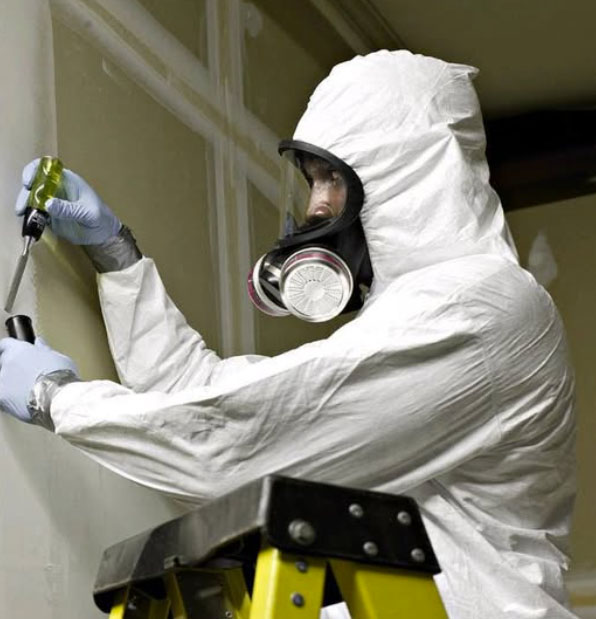
Asbestos disposal is a type of high risk construction work that comes with its own OHS risk assessment form. Like most examples of risk assessment forms, there is no standardised safe work method statement template applicable for every condition. But there are many basic steps that serve as the starting block for any SWMS asbestos removal job.
Read more
Here at SafeWorkPro we recognise the limited time business owners have. At times it can feel like risk assessment forms get either lost in the filling cabinet and are just unavailable. There is a solution to this problem through risk assessment software, but just in case you are not looking for that, we though a simple risk assessment form would also be helpful.
Read more
High risk construction work is a never-ending list of potential dangers and could be hazards that eventually result in tedious paperwork. Some workers just ignore risk assessment for construction and instead hope the painful sting of regulation doesn’t find them. With all the paperwork that’s involved, risk assessments take too much time and when you’re on the job, time is money. So who can even afford doing a totally compliant risk assessment in construction anyway?
Read more
How do you know if your risk assessment in the workplace complies with OHS legislation Australia? Risk assessment in construction is not an exact science and mistakes can be made. As a manager or business owner, it’s your legal responsibility to ensure your workforce is safe and compliant, or else you risk the regulator’s wrath.
Read more
Having a hard time understanding what a risk assessment matrix template is? Don’t worry you are not the only one confused, but getting a grip on the OHS risk assessment matrix is a central part of any health and safety program. All you need is an example of risk assessment matrix. This risk assessment matrix template is set up with the likelihood of a risk occurring on one side and the consequence involved on the other.
Read more
According to How to Manage Work Health and Safety Risks on Safe Work Australia there are 4 key factors involved in managing risks.
Read more
Good ideas don’t just appear overnight. Like a massive red gum tree growing from a tiny seed in the ground, so too do good ideas evolve into useful tools. Risk assessment software exists in many different forms but they are all share the common aim of making Australian businesses compliant with OHS legislation Australia – specifically the WHS Act.
Read more
Asbestos is a naturally occurring mineral that comes in six different forms and is made up of fibres up to 200 times thinner than human hair. When it comes to asbestos in homes, not all types are as equally dangerous to humans but most can be found within any domestic building built before 1990. Each type of asbestos comes with certain precautionary measures that should be carefully considered.
Read more
We know hazard and risk assessment procedures are vital in maintaining workplace standards that are complaint with OHS laws and regulations, but there is another reason as to why are risk assessments important.
Read more