
A Work Health and Safety (WHS) incident can happen to anyone, anywhere, regardless of your company’s size, industry, or location. No matter what area of work you and your workers are engaged in, there is always the risk of an event or series of events that could cause injury, illness, death, and loss of your company’s assets and reputation. And this risk only increases with high-risk heavy industries like mining, construction, and oil and gas.
Read more
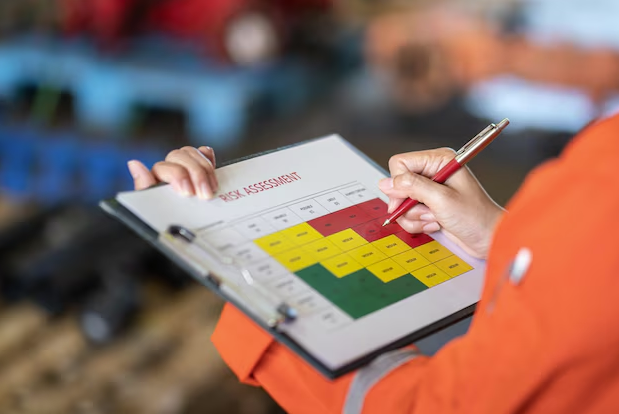
There are two answers to this question. First of all, creating safety culture within all aspects of the Australian workforce is the purpose of risk assessment. So by keeping records of completed risk assessments you have documents to refer back to for help with future health and safety tasks. This is useful for normalising a culture of workplace safety. The second reason for keeping risk assessment records is far more pragmatic.
Read more
Workplace safety issues are not always at the top of people’s priorities. Often left to the last minute or delegated down, occupational health and safety is seen as the last kid you’d pick in the schoolyard footy team. Yet with the right amount of teamwork and training, that kid could very well score the game-winning try.
Read more

Workcover NSW is part of the Safety, Return to Work and Support Division (SRWSD) of the New South Wales state government. It is responsible for the determination of the general policy and strategic direction of not only Workcover NSW but also the Motor Accidents Authority of NSW and the Lifetime Care and Support Authority of NSW. In many ways, Workcover NSW could be considered the peak regulatory body in the department of workplace health and safety, under the model of Safe Work Australia.
Read more
On a safe work site, the core ingredient will always be good communication between workers and employers. However, while almost one third of construction workers agree that conditions in their workplace stopped them from working safely, the figure reported by their employers was much lower. This gap in communication can be pinned down on two major issues; not being able to be in 101 places at once, and an inefficiency in the traditional system of paper risk assessments. In response, SafeWorkPro is bringing you much needed change for high risk construction work. We want to communicate with you how our way to resolve these issues with our epic new push notification feature!
Read more
In Australia, every state or territory has it’s own health & safety regulations enforced by their respective governmental authority. To ensure a safe workplace for all Australians, Safe Work Australia develops model codes of practice for a variety of high risk construction work.
Read more
The beauty of Safe Work Australia Month is that it not only increases the public’s awareness of safe working practices but it also fosters the sharing of innovative ideas. This approach gives employees and employers the ability to form occupational health and safety procedures that evolve with safety laws in the workplace. In one Safe Work Month event hosted by Workplace Health and Safety Queensland, Andrew
Read more

Workplace compensation is an unfortunate but necessary aspect of every industry in Australia. It is unfortunate in that a worker has experienced some form of injury or illness and it is necessary in that workers comp forms a crucial part of rehabilitation. Workcover workers compensation is but another aspect of the worksafe Australia codes of practice and should be a central consideration for any business seeking to update its safe work practices.
Read more
Workplace Health and Safety Queensland (WHSQ) is the peak authority for OHS regulations in Queensland. Although other statutory bodies play a role in Queensland health and safety, WHSQ is the main regulator and is responsible for the enforcement of OHS laws and compliance. To work in Queensland within the current framework of occupational health and safety legislation as outlined by Safe Work Australia, you need to understand who WHSQ is, what its role entails, and the extent of its legal reach.
Read more
Worksafe Western Australia is a government body responsible for the regulation of the state’s occupational health and safety legislation – specifically the Occupational Safety and Health Act 1984. Worksafe WA is essentially the equivalent of Workcover Western Australia in that its mandate includes not only the education and promotion of safe work practices but also workplace inspection and enforcement. As with all state and territory authorities, Worksafe Western Australia operates within the framework of Safe Work Australia.
Read more
Ultra-violet (UV) rays are deadly, so sun safety is vital in Queensland where the UV Index is three or above all year round. Outdoor workers must be supplied with sun protective clothing including a hat, sunscreen and sunglasses. You can also look at the possibility of rotating tasks that are in the sun, reorganising work schedules or providing a portable shade structure if the temperatures soar.
Read more

Imagine being able to devise, use and share even the most complicated safety documents on your smart phone?
Read more
Across all industries and workplaces here are common factors that should be included in a safety checklist. These are vital safeguards that work not only to normalise a culture of safety but also to prevent workplace accidents.
Read more
No matter the type of industry, whether it’s mining, construction, manufacturing or even basic labour, risk is a constantly evolving threat. Dangers associated with any type of work threaten not only the well-being of workers, but also how productive and profitable a business can be.
Read more
Unfortunately not every business can afford safety consultants. This is only a problem in so far as it means productive solutions to workplace safety issues are not being regularly sought after. However just because your business is too small or under resourced to hire safety consultants, doesn’t mean you can’t get the most out of a consultation process. The goal is improving health and safety in Australia without hurting productivity.
Read more
The Victoria Workcover Authority (trading name is Worksafe Victoria) is the state government body that monitors and regulates safety laws in the workplace. Its jurisdiction is restricted to Victoria but it is part of the broader Safe Work Australia framework. The goal of workcover Victoria is to promote safe workplaces for workers and employers, and ensure both parties have appropriate avenues for compensation and support.
Read more
At the heart of SafeWorkPro is a push to make Australian businesses more competitive through quicker, safer and more compliant risk management. SafeWorkPro can boost business productivity and streamline backend administration, all without undermining Safe Work.
Read more
There are specific definitions outlined in the Work Health and Safety Act 2011 that prescribe what constitutes a work related injury or illness. This is of particular importance when it comes to assessing one’s potential to be applicable for Worksafe injury insurance. When it comes to OHS policy around this issue, the worksafe Australia codes of practice are quite clear.
Read more
Safety training is a valuable part of any organisation’s safe work resources. Ensuring that both workers and managers are aware of proper protocols, OHS regulations and laws, will result in a safe and productive workplace. These are crucial aspects of workplace safety and are enshrined by the worksafe Australia codes of practice.
Read more
Safe work habits revolve around constantly checking the workplace for hazards and reviewing the OHS procedures in place. This is evident in the worksafe Australia codes of practice but if you are entering a new workplace or re-evaluating an old one, getting health and safety standards right can be challenging.
Read more
In the past, Australia’s vast array of workplace regulations made OHS compliance about as easy as blindfolded origami. Regulatory standards changed from state to state and figuring out which worksafe Australia codes of practice applied to which job required scrolling through pages of health and safety laws written in complicated legal-lingo.
Read more
Interpreting complicated occupational health and safety laws is a hassle that many small and large businesses struggle to find time for. This presents issues because with a range of various penalties and regulations at stake, compliance with safety laws in the workplace is not to be trifled with.Interpreting complicated occupational health and safety laws is a hassle that many small and large businesses struggle to find time for.
Read more
It’s an unfortunate truth but occupational health and safety policies are often overlooked by both managers and employees, as something that is either too boring or just a matter of paperwork.
Read more