

A Work Health and Safety (WHS) incident can happen to anyone, anywhere, regardless of your company’s size, industry, or location. No matter what area of work you and your workers are engaged in, there is always the risk of an event or series of events that could cause injury, illness, death, and loss of your company’s assets and reputation. And this risk only increases with high-risk heavy industries like mining, construction, and oil and gas.
In Australian workplaces alone, WHS incidents cost companies a massive $1.6 billion every single year. Clearly, it is so important to understand WHS requirements and ensure that your company is doing all it can to meet these requirements and keep its workers safe. And the proper steps and tools can help you do this efficiently and effectively.
So, what simple steps can you take to minimise the risk of injury, illness, death, loss of assets, and loss of reputation in your workplace? How can you prevent, resolve, and analyse workplace risks and incidents to keep you and your workers as safe as possible? And what role do safety software tools play in this? We’ve outlined this below with a recent Australian WHS incident case study.
Case Study – Roofing Business Owner Fined $25 000 For Failure to Control Fall Risk
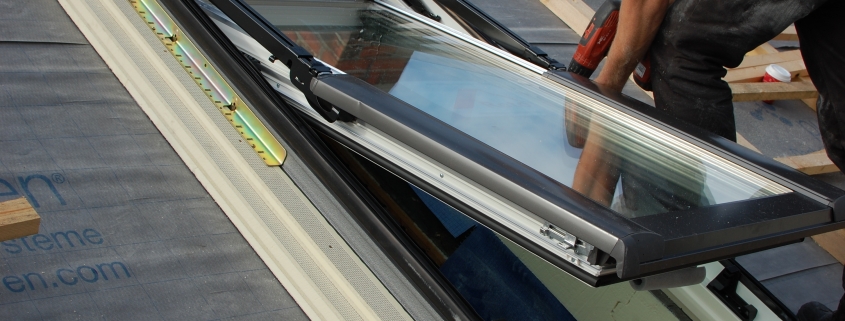
In October 2021, a roofing business owner was sentenced in a Queensland court for failing to meet the WHS requirements outlined in the Work Health and Safety Act 2011 Let’s call this owner Mike.
Mike had been running his roofing business on the Sunshine Coast with his wife for over 20 years. In 2020, his business was engaged for roofing work by a construction company. On the roof, right above a stairwell, there was a hole covered by a clear piece of sheeting that acted as a skylight. Two pieces of unsecured plywood were put over the sheeting by the site supervisor who was also engaged by the construction company. Later that day, the site supervisor removed the plywood to allow the workers to reinstall the ridge cap of the roof, which was right next to the sheeting. One of Mike’s employees stepped on the sheeting, it broke, and he fell five metres onto the concrete stairs below.
The worker was severely injured. He suffered fractures to his leg, feet, hip, lower back, wrist, and fingers. He had to have surgery, facial stitches, two weeks in hospital, and extensive rehab for months afterwards. He was left unable to work again. What did Mike do wrong? He failed to manage the fall risk associated with the sheeting hazard – he did not secure the plywood or ensure that the workers working around this hazard were using a harness.
But after the incident, Mike changed his WHS practices and introduced a new Safe Work Method Statement (SWMS). He cooperated in the investigation. The court saw that he had no previous convictions despite working in the industry for over two decades. The injured worker also gave a very supportive character reference for Mike – he explained how Mike was a great employer and member of the community and had always been safety conscious.
Mike was a good business owner, a great one even. He was experienced and safety conscious, even in the words of his worker that had been hurt. And yet, a WHS incident still happened.
Facing Reality

The reality is that a WHS incident can happen to anyone, anywhere. Even to highly experienced employers and employees – it happened to Mike, and it can happen to you too. So, how can the probability of this incident have been reduced?
In this case study, Mike’s solution was to change his WHS practices and introduce a new SWMS to mitigate the new known risks that have presented themselves from the incident.
For example, the high risk task was someone falling more than 2m. The known risk factor that could lead to this incident or event was that the polycarbonate sheeting would break if stepped on. With this knowledge, mitigation methods include the use of a secured harness or fixing a plywood cover over the poly sheeting which are recommended in the Managing the risk of falls at workplaces Code of Practice 2018 (Updated in 2021).
Mike was a very safety conscious person and an expert in his field, as was his employee. But, something was missed on this job. This risk was identified by the site supervisor who placed the unsecured boards over the sheeting, but this was never fixed in place. As Mike did not mitigate this fall risk, he was found to be at fault. It is unknown if Mike followed a simple process like a risk assessment. It’s only known that he had a SWMS for the task as required by law.
See How a simple process drives safety compliance
It is also important to realise that every factor that might lead to a certain event, compounds on the probability of the next factor. In Mike’s case, the plywood being moved, and workers not being made aware of this new hazard, was compounded by a lack of communication between the site supervisor who moved the plywood and the worker who stepped through the sheeting and fell.
This could have been prevented by fixing the plywood and making sure it was known that any changes to this needed to be recorded (i.e if the plywood needed to be removed for a job). It is therefore so important to reduce each new risk and hazard as they arise to avoid this compounding effect.
Finding a Solution
But how can you ensure that your workers are made aware of each new hazard as it arises? And that this compounding effect is avoided?
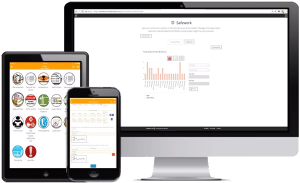
One solution is safety software. While it can’t be said definitively that safety software would have prevented Mike’s WHS incident, safety software is the tool that will help you catch these hazards before they turn into an incident. It is the tool that will simplify your safety management and ensure that safety is achievable in your workplace. After all, your safety processes and SWMS should never be a limiting factor in adapting to the ever-changing conditions of your workplace. And your focus should be on safety, not on formatting SWMS and other documents.
And that’s where safety software comes in. SafeWorkPro is the Australian safety management software that can help you focus your attention on the actions that matter in safety – like securing that plywood or putting on that harness – while simplifying the nitty-gritty compliance and documentation sides of things. So, if you want to get serious about the safety of your workplace , then consider giving safety software a try today. You can learn more about how SafeWorkPro could fit into your business here.