Blog


We joke about it now but this history of poor workplace health and safety practices highlights the importance of a risk assessment. Paper-based risk assessments have helped keep workers save for decades but now in the digital age, they are quickly becoming redundant.
Read more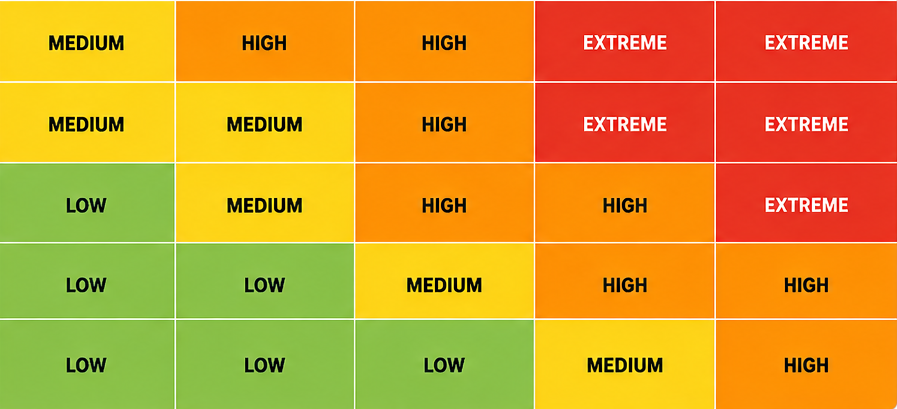
Risk assessment matrices are a common tool for risk evaluation and are used through a variety of industries and professions. The aim of a risk assessment matrix is to determine the likelihood and consequence of various health and safety hazards and risks. Usually presented in a table or graph format, risk assessment matrices usually offer three standards
Read more
In Australia, every state or territory has it’s own health & safety regulations enforced by their respective governmental authority. To ensure a safe workplace for all Australians, Safe Work Australia develops model codes of practice for a variety of high risk construction work. The purpose of these safety policies is to harmonise safe working practices and procedures under one legal framework.
Read more
The beauty of Safe Work Australia Month is that it not only increases the public’s awareness of safe working practices but it also fosters the sharing of innovative ideas. This approach gives employees and employers the ability to form occupational health and safety procedures that evolve with safety laws in the workplace. In one Safe Work Month event hosted by Workplace Health and Safety Queensland, Andrew
Read more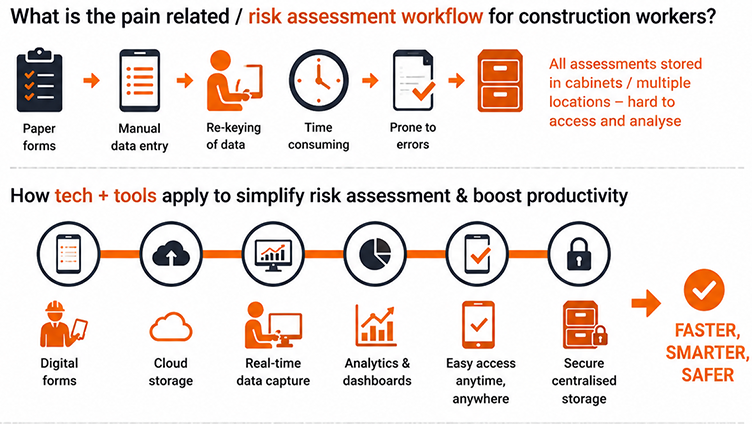
The old saying goes ‘if it ain’t broke, don’t fix it’ and it may be true for some things in life but when it comes to risks in construction, this phrase is just plain wrong. In this age of digital technology, the traditional risk assessment is out-dated and inefficient.
Read more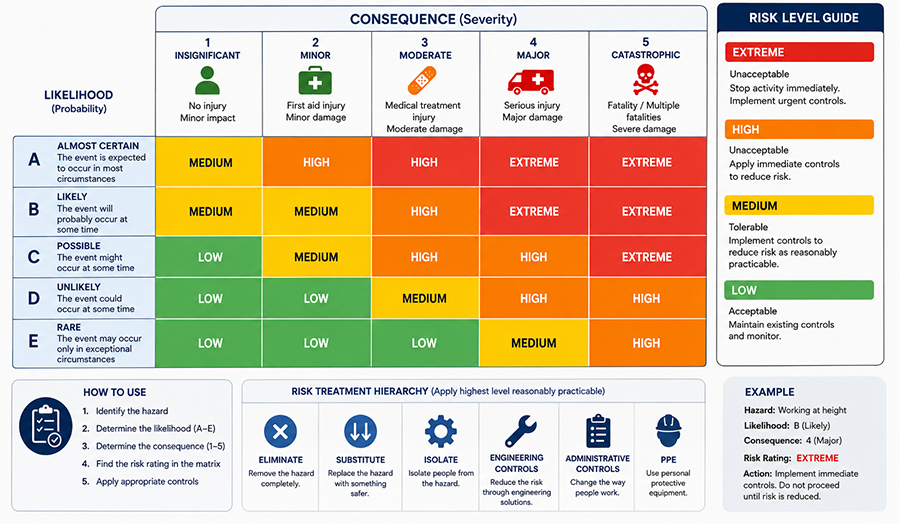
Wrapping your head around the concept of a risk assessment matrix can be tricky without an example to guide the way. An OHS/WHS risk assessment matrix is part of any general risk assessment form and helps workers put a numerical value on the hazard and risk identification process.
Read more
Workplace Health and Safety Queensland (WHSQ) is the peak authority for OHS regulations in Queensland. Although other statutory bodies play a role in Queensland health and safety, WHSQ is the main regulator and is responsible for the enforcement of OHS laws and compliance.
Read more
The evolution of risk management in software engineering has produced risk assessment software that ranges from the obsolete to the irrelevant. As Australia’s vast array of OHS laws and regulations change, it’s difficult to pinpoint what software risk assessment should be used for.
Read more
Worksafe Western Australia is a government body responsible for the regulation of the state’s occupational health and safety legislation – specifically the Occupational Safety and Health Act 1984. Worksafe WA is essentially the equivalent of Workcover Western Australia in that its mandate includes not only the education and promotion of safe work practices but also workplace inspection and enforcement.
Read more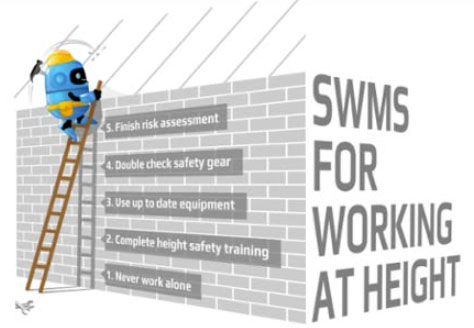
Risks in construction are hard to pinpoint but working from heights is one of the more obvious hazards. Even you’re an expert tightrope walker, it’s an accident waiting to happen as are many things in high risk construction work. A simple hazard and risk identification process can prevent a dangerous fall but what should a safe work method statement for working at heights look like?
Read more
Stay updated with the latest news, exclusive offers, and special updates delivered straight to your inbox.
Northlink Pl, Virginia QLD 4014
+61 7 2104 9966
support@safeworkpro.com