Blog


Ultra-violet (UV) rays are deadly, so sun safety is vital in Queensland where the UV Index is three or above all year round. Outdoor workers must be supplied with sun protective clothing including a hat, sunscreen and sunglasses. You can also look at the possibility of rotating tasks that are in the sun, reorganising work schedules or providing a portable shade structure if the temperatures soar.
Read more
Across all industries and workplaces here are common factors that should be included in a safety checklist. These are vital safeguards that work not only to normalise a culture of safety but also to prevent workplace accidents. But what exactly does a safety checklist look like? Well for starters it is more than just a collection of safety procedures and safety slogans.
Read more
The Victoria Workcover Authority (trading name is Worksafe Victoria) is the state government body that monitors and regulates safety laws in the workplace. Its jurisdiction is restricted to Victoria but it is part of the broader Safe Work Australia framework. The goal of workcover Victoria is to promote safe workplaces for workers and employers, and ensure both parties have appropriate avenues for compensation and support.
Read more
In the past, Australia’s vast array of workplace regulations made OHS compliance about as easy as blindfolded origami. Regulatory standards changed from state to state and figuring out which worksafe Australia codes of practice applied to which job required scrolling through pages of health and safety laws written in complicated legal-lingo. This cost businesses time and money, so in 2008 Safe Work Australia was established with the aim of streamlining this process.
Read more
There are specific definitions outlined in the Work Health and Safety Act 2011 that prescribe what constitutes a work related injury or illness. This is of particular importance when it comes to assessing one’s potential to be applicable for Worksafe injury insurance. When it comes to OHS policy around this issue, the worksafe Australia codes of practice are quite clear.
Read more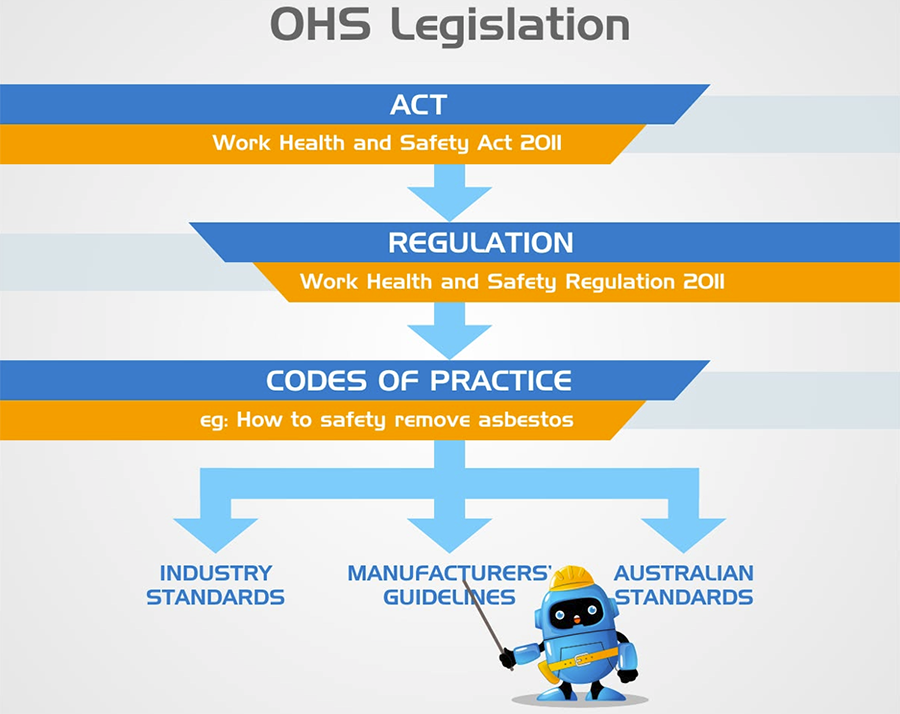
Safety training is a valuable part of any organisation’s safe work resources. Ensuring that both workers and managers are aware of proper protocols, OHS regulations and laws, will result in a safe and productive workplace. These are crucial aspects of workplace safety and are enshrined by the worksafe Australia codes of practice.
Read more
Safe work habits revolve around constantly checking the workplace for hazards and reviewing the OHS procedures in place. This is evident in the worksafe Australia codes of practice but if you are entering a new workplace or re-evaluating an old one, getting health and safety standards right can be challenging.
Read more
In the past, Australia’s vast array of workplace regulations made OHS compliance about as easy as blindfolded origami. Regulatory standards changed from state to state and figuring out which worksafe Australia codes of practice applied to which job required scrolling through pages of health and safety laws written in complicated legal-lingo.
Read more
Interpreting complicated occupational health and safety laws is a hassle that many small and large businesses struggle to find time for. This presents issues because with a range of various penalties and regulations at stake, compliance with safety laws in the workplace is not to be trifled with.Interpreting complicated occupational health and safety laws is a hassle that many small and large businesses struggle to find time for.
Read more
Stay updated with the latest news, exclusive offers, and special updates delivered straight to your inbox.
Northlink Pl, Virginia QLD 4014
+61 7 2104 9966
support@safeworkpro.com